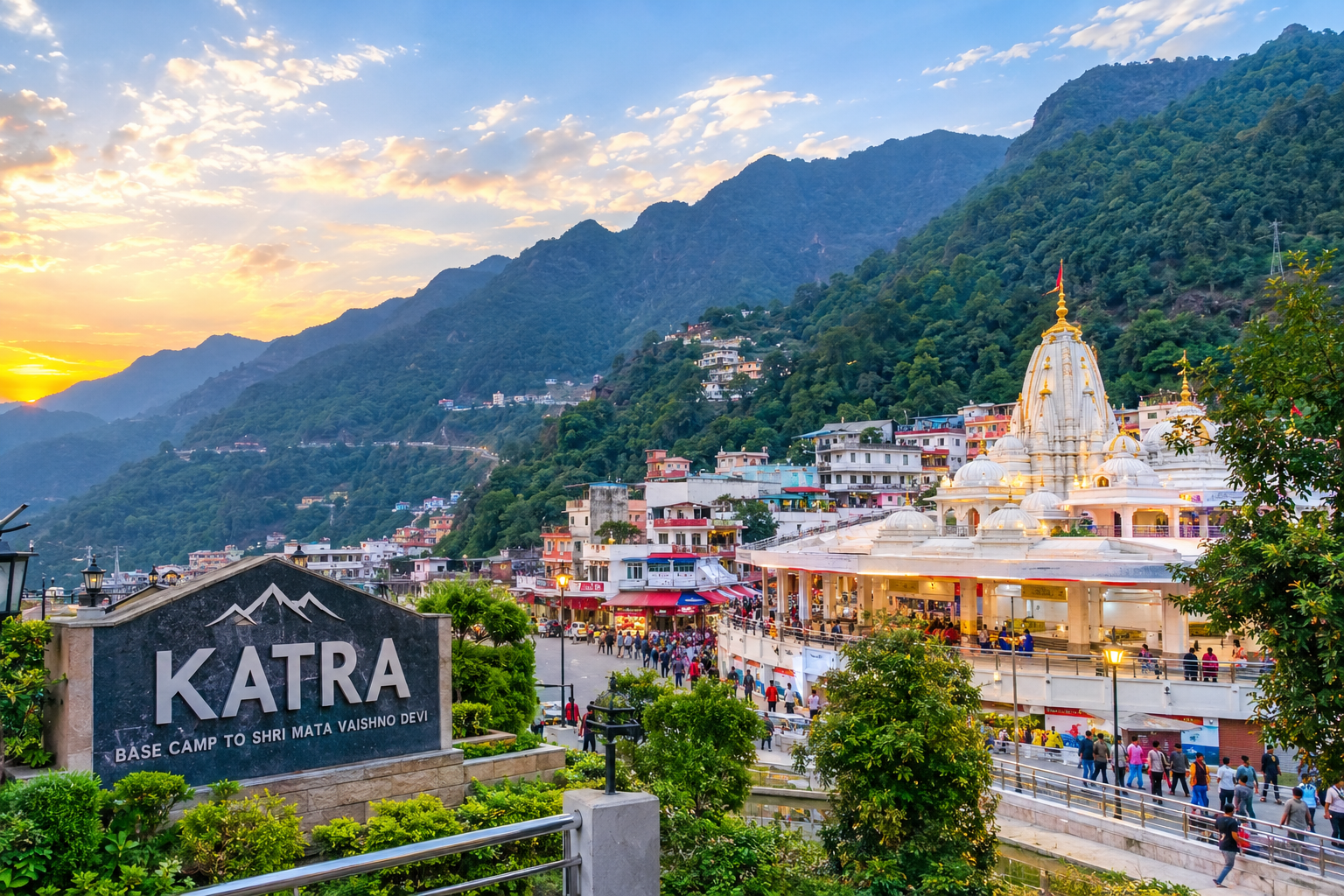
Katra is one of the most popular pilgrimage and travel destinations in Jammu & Kashmir and is best known as the base town for the sacred Shri Mata Vaishno Devi Yatra. Every year, visitors from across India travel to Katra for Mata Vaishno Devi Darshan, along with nearby sightseeing and spiritual experiences.
The good news is that the Vaishno Devi Yatra remains open throughout the year. However, the best time to visit Katra depends on whether you prefer pleasant weather, fewer crowds, festive celebrations, or a winter experience. According to the Shri Mata Vaishno Devi Shrine Board, summer months and major festival or holiday periods can experience heavy rush, while monsoon and winter can offer a comparatively less crowded travel experience.
For travelers looking for a comparatively comfortable and less crowded trip, monsoon and winter months can be good choices, subject to weather and current yatra conditions. The Shrine Board specifically notes that monsoon and winter are suitable periods for planning the pilgrimage, while May, June, July, Navratri periods and New Year vacations often see peak rush.
For a first-time visitor, September to November can be a useful period to consider for a balance between pilgrimage and sightseeing, while December and January are attractive for travelers who enjoy winter conditions. Weather and crowd levels can vary from year to year, so checking official updates before departure is important.
Summer is a popular travel season in Katra, especially because school and college holidays increase travel activity. The months of May and June can become quite crowded, and the Shrine Board lists May, June and July among the peak-rush periods.
For visitors traveling in summer, it is practical to start the yatra at a comfortable time, stay hydrated and carry light clothing. Comfortable footwear is particularly useful for pilgrims planning to complete the route on foot.
Summer can also be convenient for families because transportation, hotels and local travel options are widely available. However, people who prefer quieter surroundings may want to avoid major holiday periods.
Monsoon brings a different side of Katra and the surrounding Trikuta Hills. The Shrine Board describes the monsoon period as scenic, with lush green surroundings and waterfalls.
At the same time, rain can make travel conditions change quickly in the hills. Travelers should therefore keep rain protection with them and check official yatra and weather updates before starting their journey.
Monsoon can be appealing for visitors who want greener landscapes and potentially fewer crowds than major holiday periods. It is also a good season for travelers interested in combining the Vaishno Devi pilgrimage with sightseeing around Jammu and nearby hill areas.
Autumn is often a comfortable period for travelers interested in both pilgrimage and sightseeing. The weather generally becomes more pleasant as the summer heat reduces, making outdoor travel more convenient.
However, travelers should keep festival dates in mind. Sharad-Ashwin Navratri is one of the periods identified by the Shrine Board as a peak-rush season.
Those planning a peaceful trip should check festival dates and expected crowd conditions before finalizing accommodation and transportation.
Winter gives Katra and the surrounding hills a distinctly different atmosphere. The Shrine Board notes that December and January can experience snowfall, and describes winter as a charming season for many pilgrims. The original Holy Cave also remains open during winter.
Winter travelers should pack warm clothing, especially for the upper parts of the pilgrimage route where conditions can be colder than in Katra town. The Shrine Board also recommends carrying clothing according to the season and notes that weather in the Trikuta Hills can be unpredictable.
Winter can be an attractive option for travelers who enjoy cold-weather journeys and want to experience Vaishno Devi during a quieter season, while still checking for current weather-related travel advisories.
Navratri is a particularly important period for devotees visiting Mata Vaishno Devi. Chaitra Navratri and Sharad-Ashwin Navratri are among the peak travel periods for the shrine.
The spiritual atmosphere during Navratri is special, but the number of pilgrims can be significantly higher. The Shrine Board has stated that peak periods may result in waiting at Katra when the daily capacity around the holy shrine is reached.
Travelers visiting during Navratri should plan accommodation and yatra arrangements well in advance.
The New Year holiday period is another busy travel window. According to the Shrine Board, New Year vacations can witness heavy rush.
Families and groups planning a New Year trip to Katra should make hotel and transportation arrangements early and monitor official yatra updates before traveling.
September to November can be considered for travelers seeking a comfortable combination of pilgrimage and sightseeing, while checking festival dates.
Monsoon and some winter periods may provide a quieter experience compared with peak summer and festival rush, although weather conditions should be checked before departure.
December and January are suitable for travelers interested in cold weather and possible snowfall in the surrounding hills.
Travel during Chaitra or Sharad Navratri offers a strong festive atmosphere, but these periods can also be among the busiest times of the year.
| Month | Season | Travel Experience |
|---|---|---|
| January | Winter | Cold weather; possible snowfall in surrounding hills |
| February | Winter | Cool and suitable for pilgrimage with winter clothing |
| March | Spring | Pleasant period, except around major festival rush |
| April | Spring/Summer | Increasing warmth; good for sightseeing |
| May | Summer | Popular but peak-rush period |
| June | Summer | Warm and often crowded |
| July | Monsoon | Green landscapes; rain can affect travel conditions |
| August | Monsoon | Lush surroundings and possible rain |
| September | Autumn | Comfortable period for many travelers |
| October | Autumn | Good for pilgrimage and sightseeing, subject to festival dates |
| November | Autumn/Winter | Cooler weather and generally comfortable travel |
| December | Winter | Cold weather and holiday rush around New Year |
Before starting your journey, make sure your Yatra registration and RFID Yatra Access Card requirements are completed. The Shrine Board states that pilgrims must register before undertaking the yatra, and online registration is also available.
Carry season-appropriate clothing, comfortable shoes, an umbrella or rain protection, and essential personal items. The Shrine Board also advises pilgrims to carry spare clothing according to the season.
For peak periods, check the official website for yatra status before leaving for Katra. The Shrine Board notes that waiting can occur when pilgrim arrivals exceed the carrying capacity of the holy mountain.
Pilgrims should use the official Shrine Board website for its own services such as yatra registration, accommodation and other bookings. The Board warns that it has not authorized private travel agents to book these services on its behalf.
For a basic Vaishno Devi trip, 2 to 3 days can be enough for many travelers, depending on travel time and whether they want local sightseeing. A longer itinerary can include Jammu and nearby destinations.
A typical plan can include arrival in Katra, Mata Vaishno Devi Yatra on the next day, and local sightseeing or departure on the following day.
The best time to visit Katra depends on your travel priorities. For a quieter pilgrimage experience, monsoon and winter can be attractive options. For travelers who prefer cooler weather with sightseeing, September to November can be a useful period to consider. December and January are suitable for a winter atmosphere, while Navratri and New Year offer festive experiences but can bring heavy crowds.
Since pilgrimage conditions and weather can change, always check the official Shri Mata Vaishno Devi Shrine Board updates before starting your journey. Proper planning can make your Katra and Vaishno Devi trip more comfortable and enjoyable.